



Sales and Site Survey - [email protected]
Description
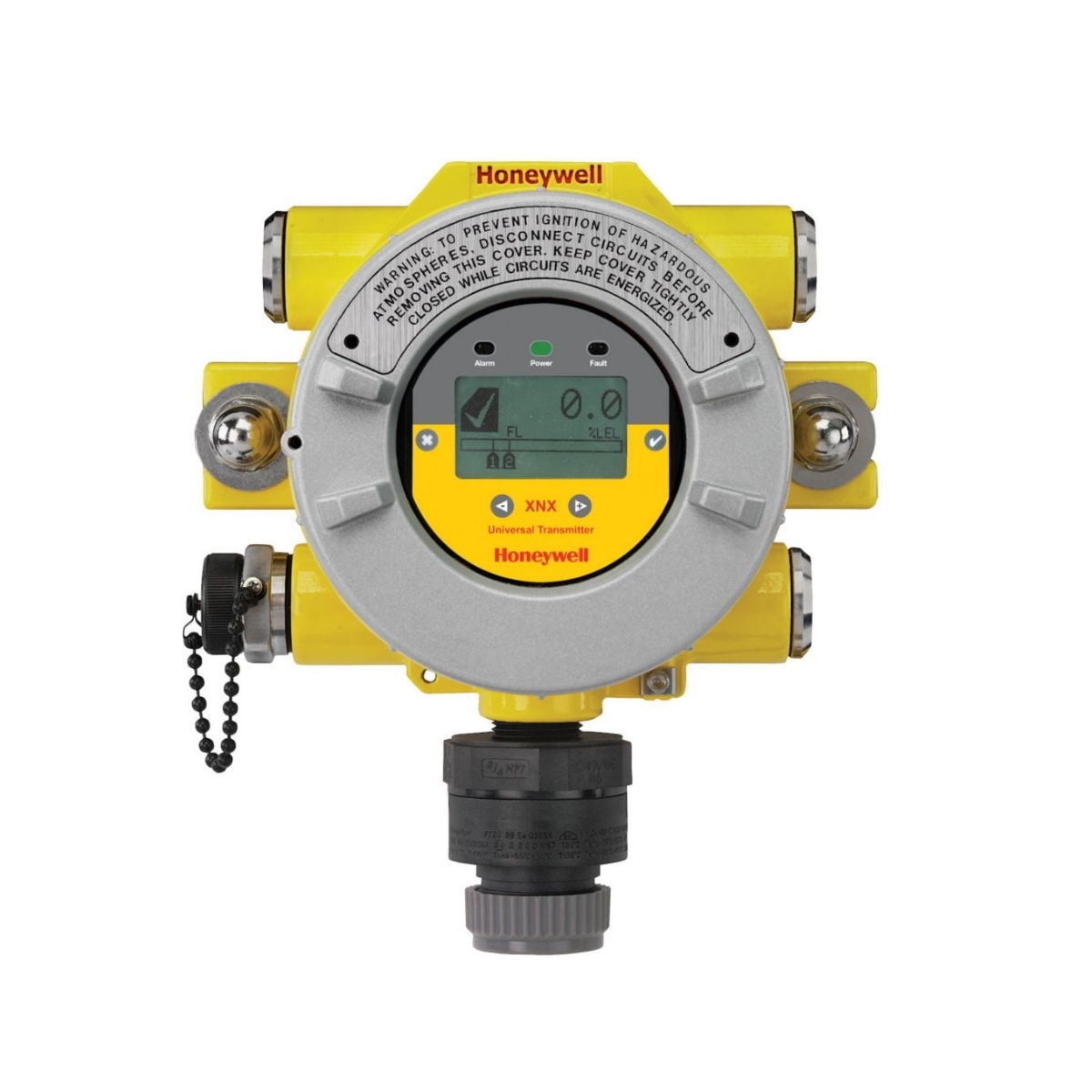
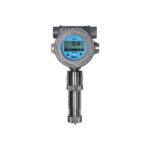
Honeywell XNX Universal Transmitter standardises flammable, toxic and oxygen gas monitoring in hazardous areas on one flexible, SIL 2 capable platform.
The Honeywell XNX Universal Transmitter is a high-specification gas detection platform that unifies flammable, toxic and oxygen monitoring through a single, common interface. It supports multiple Honeywell sensing technologies and detector families, allowing sites to standardise on one transmitter across diverse process areas. Extensive configuration options, modular communication modules and broad controller compatibility help engineering teams simplify design, reduce training and spares, and maintain robust safety performance as fire and gas systems expand or site standards change.
AT A GLANCE
- Universal multi-gas platform: Supports flammable, toxic and oxygen sensors across electrochemical, catalytic bead and infrared technologies on a single transmitter type.
- Flexible integration and networking: Standard 4–20 mA with HART plus optional Modbus, FOUNDATION Fieldbus or relay modules for easy connection to new or existing control systems.
- Safe, low-disruption maintenance: Non-intrusive, one-person operation with intrinsically safe connections and hot-swappable sensors reduces permits, downtime and service windows.
- Rugged for demanding sites: Corrosion-resistant housings, high ingress protection and global hazardous area approvals support use in harsh industrial and offshore environments.
For detailed technical data, consult the Specifications tab.
Overview of Honeywell XNX Universal Transmitter
Standardised Platform for Diverse Gas Hazards
The Honeywell XNX Universal Transmitter provides a single, scalable platform for monitoring flammable, toxic and oxygen gas hazards across complex industrial facilities. It supports Honeywell electrochemical, catalytic bead, point infrared, open-path infrared and IR cell sensor technologies, enabling a mix of point and open-path flammable gas detection alongside toxic and oxygen monitoring from one transmitter family. Compatibility with proven detector ranges, including 705/705HT, Sensepoint/Sensepoint HT, MPD, Searchpoint Optima Plus and Searchline Excel, allows standardisation without sacrificing application coverage.
This common approach to hardware, interface and installation helps engineering teams rationalise detector types, align documentation and implement consistent design rules across fire and gas systems, whether on offshore platforms, refineries, petrochemical plants, onshore terminals, gas transmission infrastructure or power stations.
Configurable Architecture and System Integration
The XNX Universal Transmitter offers more than 200 configuration options so individual units can be tailored to site standards and project specifications while staying within a single platform. It is designed for seamless integration with Honeywell gas monitoring controllers and with third-party PLCs and safety systems.
A standard 4–20 mA output with selectable sink, source or isolated modes supports varied wiring topologies. HART communication is provided as standard for remote configuration, diagnostics and monitoring via control systems or handheld configurators. Optional modular communication and relay modules extend this capability to Modbus RTU or FOUNDATION Fieldbus H1, or provide up to three configurable relays for local alarms, control or shutdown. These options are interchangeable, allowing the communication method to be adapted over the life of the plant as control architectures and standards evolve, without replacing the core transmitter.
Fast Installation and Commissioning
The XNX enclosure incorporates five threaded conduit or cable entries in regional thread options, integral surface mounting lugs and optional pipe and ceiling brackets, supporting a range of installation practices. Local or remote mounting of sensors enables optimum sensor placement at the gas hazard while keeping the transmitter accessible for operators.
A plug-in display and electronics module, plus removable plug/socket terminal blocks, simplify wiring and reduce on-site labour. Patented Reflex diagnostics and sensor recognition software automatically identify connected sensors and auto-configure key parameters, delivering plug-and-play commissioning and reducing the risk of configuration errors across large numbers of detectors.
Safe, Non-Intrusive Operation and Lower Maintenance Burden
The Honeywell XNX Universal Transmitter is built around non-intrusive, one-person servicing in hazardous areas. All configuration, calibration and routine maintenance can be performed via external magnetic switches with the enclosure closed, so no hot work permit is required for typical service tasks. An optional local intrinsically safe HART port enables hot connection of handheld configurators without opening the housing.
Intrinsically safe sensor connections allow hot swapping of toxic and oxygen sensor cartridges, minimising downtime and avoiding declassification of hazardous zones. Serviceable catalytic and IR sensors with field-replaceable elements extend detector life and reduce whole-device replacement. Surecell electrochemical sensors offer long service life, including in hot, humid environments, further reducing change-out frequency. Automatic inhibit during calibration or maintenance prevents false alarms and unwanted trips, while self-test routines and comprehensive fault indication provide early warning of developing issues.
Lower maintenance overhead: The combination of long-life sensors, hot-swappable cartridges, non-intrusive one-person servicing and standardised parts across multiple detector types helps cut call-outs, shorten service windows and reduce total cost of ownership over the lifetime of the gas detection system.
Robust Construction, Safety and Reliability
The XNX Universal Transmitter is designed for reliable operation in explosive atmospheres and harsh industrial conditions. Marine-grade painted LM25 aluminium alloy or 316 stainless steel housings with multi-coat finishes resist corrosion in offshore and coastal environments, while high ingress protection ratings support use in exposed outdoor areas and demanding indoor process zones. A wide operating temperature range and broad non-condensing humidity tolerance (sensor dependent) support stable performance from cold climates through to hot, humid locations.
Global hazardous area approvals and SIL 2 capability under functional safety standards make the XNX suitable for integration into safety instrumented systems where high availability and predictable failure behaviour are critical. Fast response catalytic and IR options, including heated optics for point IR and robust open-path IR solutions, help minimise undetected faults and routine cleaning. IR-based technologies are immune to catalytic poisons and can operate in inert atmospheres, adding resilience in applications where traditional catalytic sensors may be challenged.
Operator-Friendly Interface and Global Deployment
The transmitter incorporates a large, backlit LCD display presenting text, bar graphs, digits and status icons for clear indication of gas levels and diagnostics in all lighting conditions. A multilingual user interface supports multiple languages, simplifying deployment across global fleets and mixed-language teams.
Because the XNX platform uses a common user interface, shared installation methods and common tools across different detector and sensor types, training demands are reduced and operator familiarity improves. Combined with the supplied installation and maintenance accessories and a comprehensive documentation set covering datasheets, manuals and guides, this supports rapid roll-out of standardised gas detection across complex sites and long-term consistency in operation and maintenance practices.
Specifications
| Material | Housing: 5-coat marine finish painted aluminium alloy or 316 stainless steel |
| Weight (Approx.) | Aluminium alloy: 2.8kg (6.2lbs). 316 stainless steel: 5kg (11lbs) |
| Mounting | Surface mount via integral mounting lugs. Optional pipe mounting kit suitable for Ø100mm to 150mm (Ø4" to 6") pipe. Optional ceiling mounting bracket |
| Entries | 5 conduit/cable entries (2 right, 2 left, 1 bottom). Entry size M25 for ATEX/IECEx versions or ¾"NPT for UL/CSA certified versions |
| Dimensions | 160mm × 197mm × 114mm (6.1" × 7.8" × 4.5") |
| IP Rating | IP66 in accordance with EN60529:1992. NEMA 4X |
| Operating Temperature | -40°C to +65°C (-40°F to +149°F) |
| Operating Humidity | 0-99%RH (non condensing) |
| Operating Pressure | 90-110kPa |
| Storage Conditions | -40°C to 75°C (-40°F to 167°F), 0-99% non-condensing |
| Input Voltage Range | EC and mV versions 16 to 32Vdc, IR version 18 to 32 Vdc (24Vdc nominal) |
| Max Power Consumption | XNX EC (Toxic): 6.2 watts XNX mV (Catalytic or IR cell): 6.5 watts XNX IR with Searchpoint Optima Plus: 9.7 watts XNX IR with Searchline Excel Receiver: 13.2 watts |
| Current Output | Fully configurable isolated 4-20mA & HART® output module providing current sink, current source and isolated modes of operation (supports HART® 6.0 protocol) supplied as standard Default current output settings: ≥0.0<1.0mA Fault / 4.0 mA to 20.0mA Normal gas measurement / 2.0 mA or 4.0 mA (17.4mA) Inhibit (during configuration/user settings) HART® mode: 3mA Fault/Warning / 4-20mA Normal gas measurement / 22.0mA Maximum over range The available output range for Inhibit, Warning, Beam Blocked and Low Signal is from 1 to 4mA. For an over range condition, the range is 20 to 22mA |
| 4-20mA Signal Accuracy | +/-1% Full Scale |
| Functions Supported by HART® | Gas reading Gas name and units of measurement 4-20mA signal level General/device information Installation Configuration Forcing of 4-20mA output Detailed sensor information including: Optical signal level / Dynamic reserve (Searchline Excel only) / Raw reading / 24V supply voltage / Temperature Calibration and configuration status Detailed fault and warning information Fault and alarm history Zero calibration |
| Terminals | Cage style pluggable with retaining screws for wire diameter 0.5mm² to 2.5mm² (approx. 20AWG to 14AWG) |
| Certification | European: ATEX II 2 (1) G Ex d [ia IIC Ga] IIC T4/T6 Gb / II 2 (1) D Ex tb [ia IIIC Da] IIIC T85 Db |
| International: IECEx Ex d [ia IIC Ga] IIC T4/T6 Gb / Ex tb [ia IIIC Da] IIIC T85 Db | |
| North American: UL: Class I, Div 1, Groups A, B, C, and D; Class II, Div. 1 Groups F & G / Class 1, Zone 1 Groups IIB + H2; Class II, Zone 20 & 21 / FM: AEx D [ia IIC] IIB + H2 T6 -40°C ≤Tamb ≤65°C | |
| Canadian: CSA: Class I, Div 1, Groups B, C, and D; Class II, Div. 1 Groups F & G / Class I, Zone 1 Groups IIB + H2 | |
| EMC: EN50270:2006 EN61000-6-4:2007 | |
| Performance: Europe – ATEX, EN45544, EN50104, EN50271:2010, EN13980, EN60079-29-1 / North America – UL 913, UL 1203, CSA 22.2 No. 152 / IEC61508 (SIL Assessment, SIL 2), IECEx OD 005 | |
| Contact manufacturer for country-specific certification |
Documents
Videos