 We Deliver Worldwide
 Call +44 (0) 1200 445 804
 Email info@ribble-enviro.co.uk




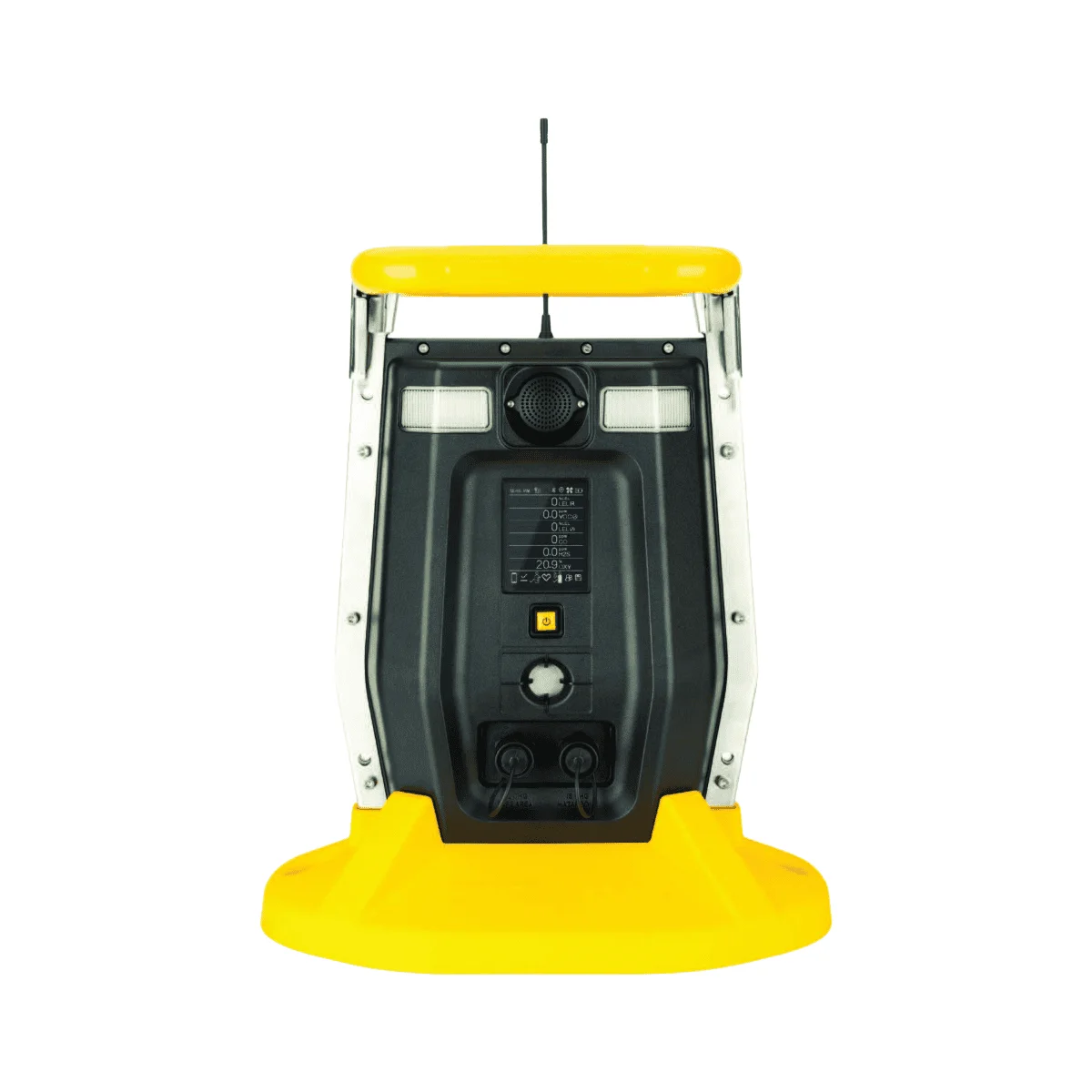
| Model Number | BWRR100P/BWRR100D |
| Size | 15.8 × 11.4 × 18.5 in. / 40.0 × 29.0 × 47.0 cm |
| Weight | 17.6 lb / 8 kg |
| Gas Sensor Slots | Up to 6 |
| Gas Sampling Method | Pumped or diffusion |
| Battery | Rechargeable Li-ion battery (3.7V / 26.4 Ah) |
| Charging Time | Less than 18 hours when instrument is powered off |
| Running Time | 8 weeks for low-power model; other models vary by configuration |
| Keypads | One-button operation and programming |
| Display | 3.5" 240 × 320 TFT colour LCD with white LED backlight |
| Alarm | Red/yellow/green LED alarm; buzzer alarm 108 dBA @ 1 m; on-screen indication of alarm conditions |
| Datalogging | Complete gas sensors and instrument information for at least 4 months at one minute intervals |
| Wireless | ISM license free band: Bluetooth Low Energy Module (BT 4.2 / 5.0), 2.4 GHz, in default; Mesh Module: IEEE 802.15.4 868 MHz / 915MHz / 2.4 GHz (optional); OR Wi-Fi Module: 802.11 b/g/n 2.4 GHz (optional) |
| Radio Module & Range | Bluetooth Low Energy: RMBLEC, up to 16.4 ft. / 5 m; Mesh: RM900A, 984 ft. / 300 m (868-900 MHz) or RM2400, 492 ft. / 150 m (2.4 GHz); Wi-Fi: RMWIFIC, up to 164 ft. / 50 m |
| Outdoor Location | GPS receiver module: GPS L1 frequency (1575.42 MHz) (optional); Only with IEEE 802.15.4 868 MHz / 915MHz modem and WIFI |
| IP Rating | IP65 for pumped models; IP67 for diffusion models |
| Temperature | -4 to +140°F (-20 to +60°C) for pumped models; -40 to +140°F (-40 to +60°C) for diffusion models |
| Humidity | 5 - 95% RH (non-condensing) |
| Safety Certifications | cETLus: Class I Division 1; Group A, B, C, D; T4 IEC EX/ATEX: I M1 Ex ia I Ma / II 1G Ex ia da IIC T4 Ga |
| For LELIR/CO2 sensor installed: I M1 Ex ia I Ma / II 2G Ex ia da db IIC T4 Gb / 1G Ex ia da IIC T4 Ga | |
| Wireless Approvals | FCC Part 15, IC, RE-D |
| RoHS (Pending) | RoHS Compliant, Directive (EU) 2015/863 |
| Noise Sensor | 60-125 dBA range; (respond: 100 Hz to 8 kHz), 1 dB resolution; A-weighted 15 second equivalent level; updated every 5 seconds |
| External Ports - Safe Area Charge Port (AC CHG Safe Area) | Battery charger input 6 VDC 3 A typical; connect to AC/DC adaptor |
| External Ports - Field Charge (IS CHG Hazardous) | Intrinsically safe line power supply input or SolarPak to extend instrument runtime (low-power model only) |
| External Ports - RAEMet Port (Serial) | Port to RAEMet wind sensor (optional) |
| External Ports - Analog/Switch Input Port (4-20 mA In) | 4-20 mA signal input, X1 channel/switch on/off signal input, X1 channel (optional) |
| External Ports - On/Off Switch Output (Switch) | Max 20 V / 120 mA, SPDT Normal Open, X3 channels for external ports (optional). Refer to User Guide for complete details. |

Honeywell BW RigRat
Price on application
Hire
| Model on fleet | Rate (per week) |
|---|---|
| Product is configurable. Please contact us to discuss options. Prices starting from £150.00 p/week. | £150.00 |
Select a model above, then request your hire.
Request this hire
Request a quote
Typically quoted within 2 hours
Add sensors, power, accessories & more
Need help choosing? Sales: mark@ribble-enviro.co.uk | Hire: fiona@ribble-enviro.co.uk
-
 ShipServ
Approved Supplier
-
 6-Month
Certified Calibration
-
 Fast Shipping
To Ports Worldwide
-
 Contact Us
For Custom Orders
Honeywell BW™ · Hire or Purchase · Price on application
BW RigRat
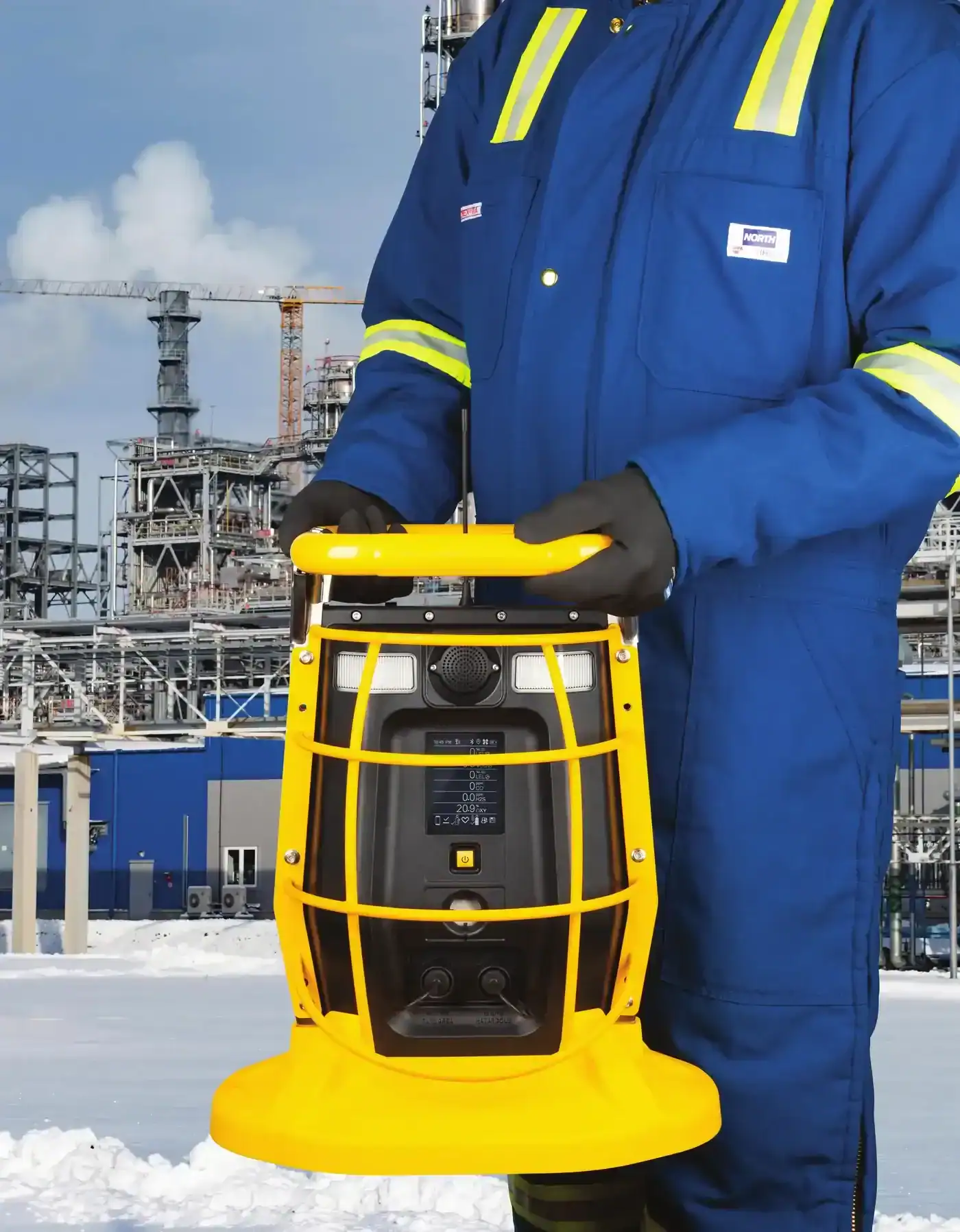
The area monitor the whole site can see. Up to six gas sensors, up to eight weeks of runtime in a basic standalone setup, and a one-button start. Deploy it standalone, or link it over LoRa long-range radio so every reading lands on one screen in the site office. ATEX/IECEx Zone 0 and CSA C1D1 certified.
Emergency hire: order by midday and it ships the same working day.
- 6 Interchangeable sensor slots
- 8 wks Max runtime, standalone setup
- 1 km LoRa range, line of sight
- Zone 0 ATEX / IECEx & C1D1
The problem with area monitoring on a live plant
Your gas data is stranded where you put the detector
A standalone area monitor does one job well: it warns whoever is standing next to it. But on a petrochemical or process site, the people who need that reading are rarely the people beside the unit. By the time the data reaches them it is a paper record of something that already happened.
Standalone monitoring
- Readings are visible only at the unit, so someone has to walk the area to check.
- The permit team has no live view of the zone they just signed off.
- Exposure evidence arrives after the job, by download, if anyone remembers.
- An alarm on a far-side vessel is heard by whoever happens to be near it.
- Every check inside the red zone is another person exposed.
With LoRa
RigRat over LoRa
- Every unit reports to one Central Hub in the site office over long-range radio.
- The permit team sees the zone live, before and during the work.
- Continuous logged record for SHEQ reporting and exposure evidence.
- An alarm anywhere on the network is visible centrally, immediately.
- Fewer trips into the hazardous area to read an instrument.
Why LoRa, and not Wi-Fi or mesh
Long range, low power, and nothing on your corporate network
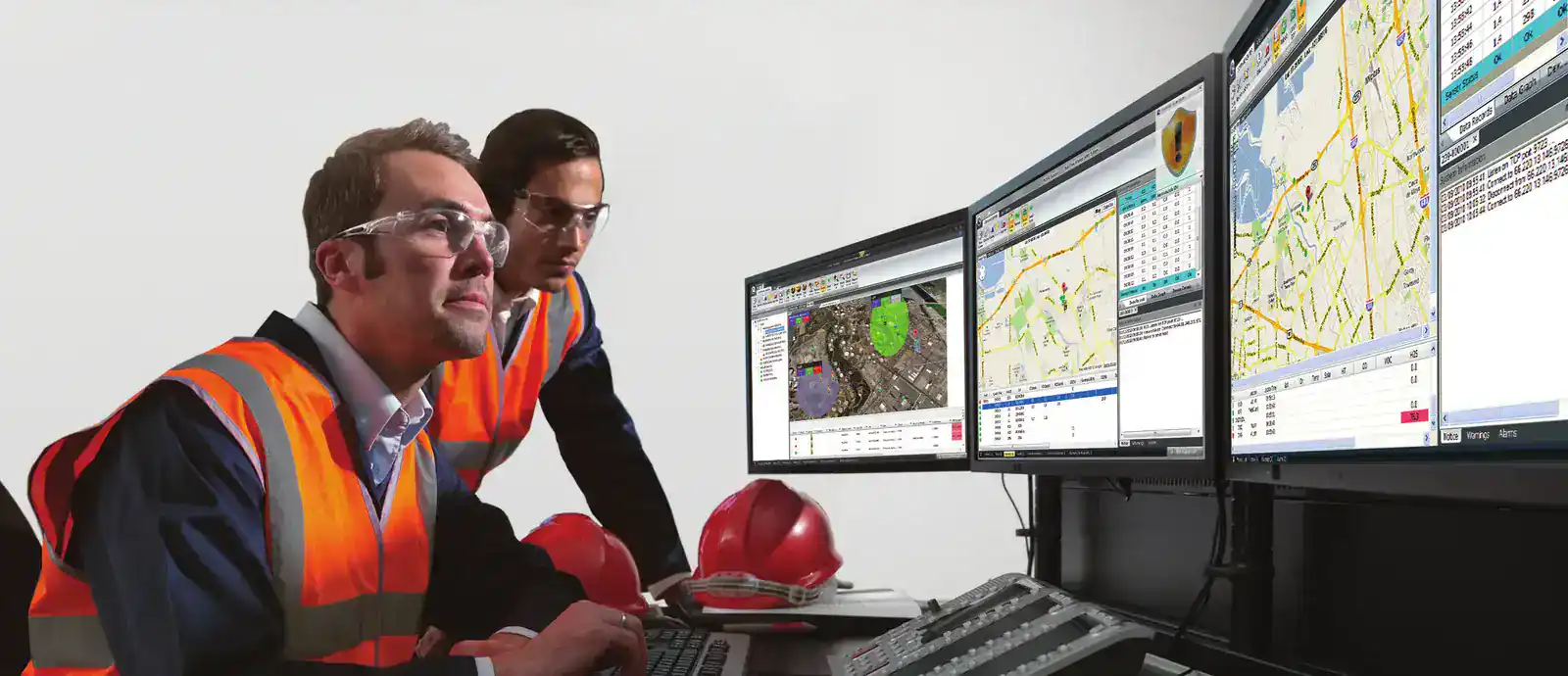
LoRa (Long Range Radio) is built for exactly this problem: getting small packets of data a long way, through a congested industrial site, from battery-powered devices that must run for weeks. The Central Hub gathers your RigRats onto one private network, then backhauls to the monitoring platform over its own 4G LTE SIM, Wi-Fi or wired LAN, whichever your site allows.
Node 1 · At the work face
RigRat field units
Placed at the work face, vessel or fence line. ATEX / IECEx Zone 0, IP65 / IP67, −40 °C to +60 °C. Local siren and lights keep working with or without the link.
To the Hub: private LoRa radio, 868/915 MHz, up to 1 km line of sight.
Node 2 · In the site office
Honeywell Central Hub
Private LoRa network, up to 64 devices, max 2 hops. It is indoors, safe area only (IP30). The Hub belongs where the screen is, not on the plant.
To the platform: the Hub’s own 4G LTE, Wi-Fi or wired LAN, over MQTT or HTTP.
Node 3 · Anywhere
Monitoring platform
Live readings, alarms and location on any browser or phone. Local datalog also written to the Hub’s SD card.
- 1 km Range, antenna to antenna, line of sight
- 64 Max devices per hub (56 plus 8 router)
- 2 hops Unit → router → hub, round obstructions
- 868/915 MHz Licence-free ISM band with no spectrum fees
It goes further on less power
Sub-GHz radio penetrates structures and travels further than 2.4 GHz for the same power budget. That is how the RigRat reaches the site office from the work face. With the wireless link on, the battery runs down faster than in a basic standalone setup.
It’s a private network
The Hub runs its own LoRa network on licence-free spectrum. Your detectors never join the plant’s Wi-Fi or corporate LAN, which is the usual sticking point with your cyber security team.
It deploys in an afternoon
There is nothing to trench and no fixed infrastructure to install. You site the Hub, power it, place the units and confirm the link, then pick it all up when the turnaround ends.
Wireless without the platform
Not every job needs a hub
Where the requirement is a safety perimeter rather than a reporting system, RigRats can also be linked to each other directly. One unit alarms, they all alarm, so a leak on the blind side of a vessel evacuates the whole work party. It works without a hub, a SIM or any software.
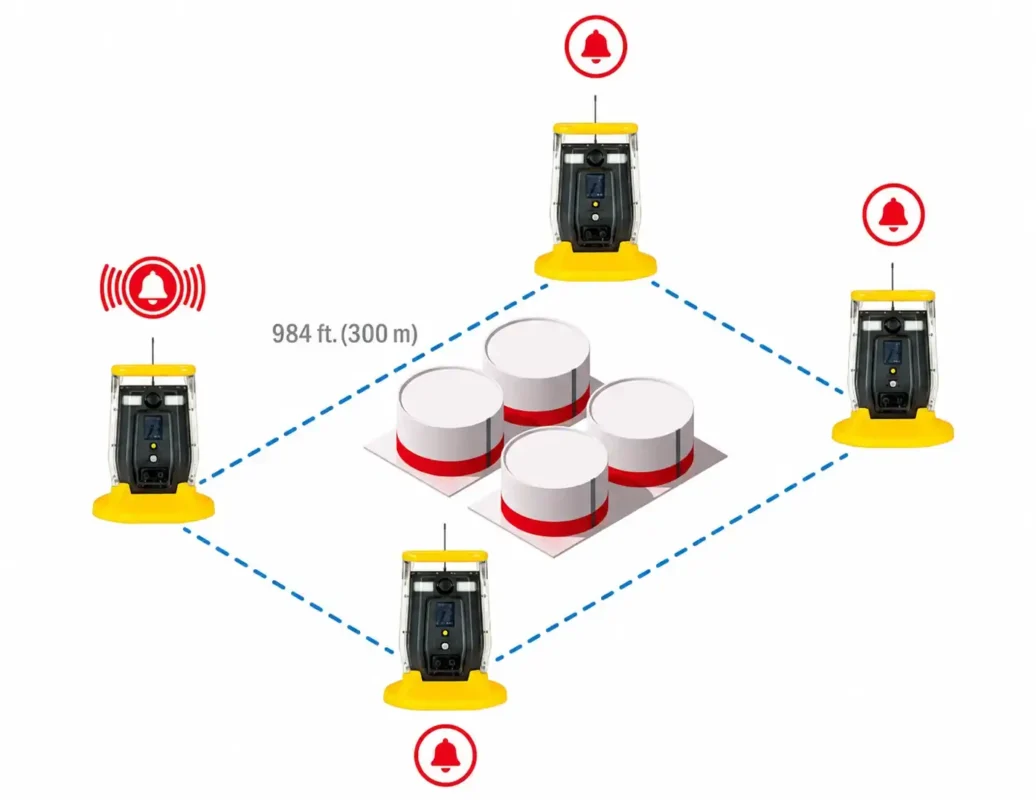
Linked perimeter
Position several units around a tank, pit or pipe run. One monitor in alarm triggers the rest. Remove a unit and the remaining chain carries on without reconfiguration.
Wireless assistant
An on-screen signal-strength view for each unit, so the technician can reposition until the link is solid, before the permit is issued rather than after.
Bluetooth on every unit
Every RigRat ships with BLE. Set alarm points, check calibration status and email the datalog or calibration certificate from the phone app. Training takes about 20 minutes.
How we supply it
Three packages, hire or purchase
We build every package to the job rather than selling it off a shelf. You tell us the sensors, the number of units and whether you want the wireless layer, and we build and quote it to match. Quantity and duration discounts apply to hire.

RDK · Local
Rapid Deployment Units
Permit-driven works, contractors, hot works.
- RigRat units, standalone or linked as a perimeter
- Sensors specified to the permit: 4-gas, CO₂, PID or toxic
- No hub, no SIM and nothing for IT to approve
- Grab-and-go: one button, and nobody on site needs to be a specialist
Most specified
RDK+ · LoRa
Rapid Deployment Kit
Response teams, and HSE / SHEQ managers who need the record.
- LoRa RigRats plus a Honeywell Central Hub
- Laptop optional, or view on any browser or phone
- Live picture of a developing incident from outside the hot zone
- Continuous exposure record and calibration status for reporting
- Available as an emergency hire, dispatched same day
DLK · Bluetooth
Datalogging Kit
Brownfield sites, compliance and reporting.
- RigRat (BLE), MultiRAE (BLE) and MiniRAE series (BLE)
- Tablet or phone collects the logs
- Datalog and calibration certificates emailed from the app
- Records without a network of any kind
Pricing: hire is quoted per week or per month against the package and sensor set, with discounts for quantity and duration. Bespoke configurations are quoted individually. Ask for the current rate card, or book a Teams demo and we’ll walk the kit through with you first.
Order by midday and it ships the same working day
When a job stops because the gas detection isn’t there, that is what the hire fleet is for. We hold RigRat units in stock and fit the sensor set you order before it leaves us, calibrated, certificated and ready to switch on. Wireless kits go out the same way, hub included.
Monday to Friday. Next-day delivery to UK mainland. Call for weekend and out-of-hours callouts.

Sensor configurations
The base unit is fixed. The sensors are the decision.
Every RigRat starts as the same base unit with Bluetooth, in a diffusion or pumped version. What changes is what goes in the six sensor slots, and that follows the permit rather than the catalogue. These are the configurations we hold and build most often.
| Configuration | Detects | Typical application |
|---|---|---|
| 4-gas | LEL · O₂ · CO · H₂S | The permit default. Confined space entry, vessel welding, pit work, general hot works. |
| 4-gas plus CO₂ | LEL · O₂ · CO · H₂S · CO₂ | Fermentation, inerted vessels, cellars and any space where CO₂ displaces oxygen. |
| 4-gas plus PID | LEL · O₂ · CO · H₂S · VOC | Petrochemical and solvent work: tank cleaning, line breaking, contaminated ground. PID reads to 0.1 ppm VOC. |
| 4-gas plus toxic | LEL · O₂ · CO · H₂S plus one specific toxic | Where a process gas is known: NH₃, Cl₂, SO₂, NO, NO₂ or HCN alongside the standard four. |
| Toxic-specific | One to six toxic sensors | Built around a named hazard on your COSHH or process safety assessment. Priced per sensor. |
| Bespoke | Up to six slots, any mix | Extended ranges, infrared combustibles, noise sensor, RAEMet wind sensor for plume tracking, pump for remote sampling. Enquiry only. |
Available sensors
- Combustible gases (IR)
0-100% LEL / 0-100% vol. - Combustible gases (LEL)
0-100% LEL - Carbon dioxide (CO₂)
0-5% vol. / 100 ppm - Carbon dioxide (CO₂) ext. range
0-100% vol. - Volatile organic compounds (VOC)
0-2000 ppm - Carbon monoxide (CO)
0-500 ppm - Carbon monoxide (CO) ext. range
0-2000 ppm - Carbon monoxide (CO) H₂-resistant
0-1000 ppm - Hydrogen sulphide (H₂S)
0-100 ppm - Hydrogen sulphide (H₂S) ext. range
0-1000 ppm - Sulphur dioxide (SO₂)
0-20 ppm - Oxygen (O₂)
0-30% vol. - Nitric oxide (NO)
0-250 ppm - Nitrogen dioxide (NO₂)
0-20 ppm - Hydrogen cyanide (HCN)
0-50 ppm - Ammonia (NH₃)
0-100 ppm - Chlorine (Cl₂)
0-50 ppm
PID readings are given in isobutylene equivalents. Where you are monitoring a specific compound, a correction factor applies. Ask us for the factor for your gas, or we’ll set it in the instrument before dispatch.
Application story
Emergency hire, four units, chemical plant
Anonymised: UK chemical manufacturing site
A contractor-heavy plant where nothing starts without gas detection on the permit. Four RigRats went out on an emergency remote-monitoring hire.
Most of the physical work on this site is done by contractors, who still have to meet the plant’s own risk assessments and procedures. The permit team writes the specification, and they specify both kinds of detection. Non-wireless area monitoring covers the majority of works (welding vessels, cutting and repairing pipework, pit work), because a permit simply won’t be issued without gas detection present. Wireless monitoring goes where the value is in seeing the zone live.
What pulled it through
The HSE and SHEQ managers. They needed exposure data to support their reporting, and the remote system gave them a real-time picture of gas levels across the site rather than a download after the fact.
What held it up
Budget sign-off above the permit team’s PO limit went to management. Separately, the cyber security team needed to understand the solution before they’d approve anything described as wireless.
How the security question resolved
The detectors never touch the corporate network. They form a private LoRa network to the Hub, which backhauls over its own connection. Once that was drawn out, the objection went away.
The questions we always get
Before you take it to your permit team
Will our cyber security team approve this?
This is the most common blocker on a chemical or petrochemical site, and it’s usually resolved by drawing the architecture out. The RigRats do not join your network. They talk to the Central Hub over a private LoRa radio network on licence-free 868/915 MHz spectrum. That is a separate physical layer with nothing to do with your plant Wi-Fi or corporate LAN.
The Hub is the only device that needs an uplink, and you choose which: its own 4G LTE SIM (nothing of yours involved), your Wi-Fi, or a wired LAN port if your IT team would rather control it. We can supply the LTE route specifically so the whole system stays off your infrastructure.
Can it go in a hazardous area?
The RigRat is certified ATEX/IECEx Zone 0 and cETLus Class I Division 1, Groups A to D, T4, rated −40 °C to +60 °C. It is designed to be placed at the work face.
The Central Hub is not. It is IP30 and rated for indoor, non-hazardous areas only, so it lives in the site office, control room or a welfare cabin, which is where you want the screen anyway. The LoRa link is what covers the distance between the two.
How far does the wireless actually reach on a real site?
Up to 1 km external antenna to external antenna, line of sight. Real plants are not line of sight, so the network supports two hops: a unit configured as a router relays for units behind it, letting you reach round a structure or over a bund. One Hub handles up to 64 devices: 56 standard plus 8 routers.
The Wireless Assistant screen shows signal strength for each unit, so your technician confirms the link during setup rather than discovering a dead spot mid-shift.
How long does it run, and what happens on a long turnaround?
Up to eight weeks on a single charge in a basic standalone setup, with no remote monitoring. More sensors or the wireless link run the battery down faster, so runtime is shorter. For longer deployments there is an intrinsically safe line-power supply for hazardous areas, and an optional 30-watt SolarPak for outdoor work. Nothing needs a battery swap mid-task or a shutdown at shift change.
Our contractors aren’t gas detection specialists. Can they use it?
One-button operation: turn it on and deploy it. The display is large, tilted back and shielded so it reads in rain, snow and cold without ducking down to it. Alarm state is a colour: green for a safe area, red in alarm, plus a 108 dBA sounder for noisy environments.
Configuration is done over Bluetooth from a phone app rather than software on a laptop, so less-trained personnel can be sent to update a unit. Honeywell puts training at roughly 20 minutes.
We need it for a job starting this week.
Order by midday on a working day and it ships the same day, for next-day delivery to UK mainland. We hold RigRat units in stock and fit the sensor set you order before dispatch, calibrated and certificated, so it works the moment it arrives.
That applies to the wireless kits too, hub included. The chemical plant case above was a four-unit remote monitoring kit on an emergency hire. For weekend or out-of-hours callouts, call +44 (0) 1200 445 804 rather than using the form.
Does it replace our personal gas detectors?
No, and it isn’t meant to. A personal detector monitors one worker’s breathing zone. The RigRat monitors the area around the work, so it warns about a leak developing nearby before it reaches anyone. It is fully self-contained, so you don’t repurpose personal detectors to cover the area, and both jobs get done properly. Where you already run wireless personal detectors, the RigRat can act as the link that brings them onto the same controller.
Tell us what you need and when
Send us the sensors, the number of units, whether you want the wireless layer or just the units, and the dates, and we’ll quote it for hire or purchase. If it’s easier to see it first, we’ll run a 20-minute Teams demo with the kit in front of us.
ShipServ approved | Calibration & certificates | UK hire fleet, fast dispatch
Prefer email? Sales sales@ribble-enviro.co.uk · Hire fiona@ribble-enviro.co.uk
The technical detail
Specifications and downloads
The numbers your permit team will check, taken from the Honeywell datasheets. Instrument first, then the Central Hub. The source documents are underneath if you’d rather forward the PDFs.
BW RigRat
Honeywell Central Hub
| Core | ARM 4-core, 2 GB RAM, 8 GB flash, Ubuntu |
|---|---|
| Power | 12-24 V DC 500 mA, or USB-C 5 V 2 A |
| Consumption | 6 W |
| LoRa | 868/915 MHz and 470 MHz, Honeywell proprietary network |
| LoRa range | Up to 1 km to gas detectors; up to 64 devices per hub |
| Ethernet | 10/100M adaptive, RJ45 uplink |
| Cellular | LTE FDD CAT/4, plug-in SIM 1.8 V / 3.0 V |
| Wi-Fi | 802.11 g/n 2.4 GHz uplink |
| Bluetooth | BT / BLE 5.0 |
| GPS | GPS L1 C/A, −163 dBm tracking sensitivity |
| Storage | Micro-SD card, 32 GB |
| NFC reader | 13.56 MHz |
| Working temp. | −20 to +60 °C |
| Enclosure | IP30, indoor and non-hazardous areas only |
| Size | 194 × 131 × 44.5 mm, 950 g |
| Software | Embedded web server for status and configuration; SD log; firmware update over browser |
| Certification | RE-D (EU), FCC and IC (North America), UL/EN60950-1 adaptor |
| Compliance | RoHS3, REACH, California Prop 65, TSCA PBT |
Specifications are taken from the Honeywell BW RigRat datasheet and Central Hub datasheet. Honeywell revises products on an ongoing basis, so we confirm the exact specification of what we supply at quotation.
Documents

More downloads
- BW RigRat brochure Overview, features and applications (PDF, 6.5 MB)
- BW RigRat wireless solution LoRa architecture and deployment (PDF, 7.9 MB)
- Honeywell Central Hub datasheet Hardware and software specification (PDF, 1.9 MB)
- Honeywell Central Hub manual Installation and configuration (PDF, 2.4 MB)
- Central Hub certificate of conformity Declaration of conformity (PDF, 325.8 KB)
Gases
| Sensor | Range | Resolution | Temperature Range |
|---|---|---|---|
| Combustible Gases (IR)* | 0-100% LEL 0-100% vol. |
1% LEL 0.1% vol. |
-40 to +140°F -40 to +60°C |
| Combustible Gases (LEL) | 0-100% LEL | 1% LEL | -40 to +140°F -40 to +60°C |
| Carbon Dioxide (CO2) | 0-5% vol. 100 ppm |
0.01% vol. 100 ppm |
-4 to +131°F -20 to +50°C |
| Carbon Dioxide (CO2) (Ext. Range) | 0-100% vol. | 0.1% vol. | -4 to +131°F -20 to +50°C |
| Volatile Organic Compounds (VOC) | 0-2000 ppm | 0.1 ppm | -4 to +131°F -20 to +50°C |
| Carbon Monoxide (CO) | 0-500 ppm | 1 ppm | -40 to +140°F -40 to +60°C |
| Carbon Monoxide (CO) (Ext. Range) | 0-2000 ppm | 10 ppm | -4 to +131°F -20 to +50°C |
| Carbon Monoxide (CO) (H2 Resistant) | 0-1000 ppm | 5 ppm | -4 to +140°F -20 to +60°C |
| Hydrogen Sulphide (H2S) | 0-100 ppm | 0.1 ppm | -40 to +140°F -40 to +60°C |
| Hydrogen Sulphide (H2S) (Ext. Range) | 0-1000 ppm | 1 ppm | -4 to +131°F -20 to +50°C |
| Sulphur Dioxide (SO2) | 0-20 ppm | 0.1 ppm | -40 to +140°F -40 to +60°C |
| Oxygen (O2) | 0-30% vol. | 0.1% vol. | -40 to +140°F -40 to +60°C |
| Nitric Oxide (NO) | 0-250 ppm | 0.5 ppm | -4 to +131°F -20 to +50°C |
| Nitrogen Dioxide (NO2) | 0-20 ppm | 0.1 ppm | -4 to +131°F -20 to +50°C |
| Hydrogen Cyanide (HCN) | 0-50 ppm | 0.5 ppm | -4 to +131°F -20 to +50°C |
| Ammonia (NH3) | 0-100 ppm | 1 ppm | -4 to +131°F -20 to +50°C |
| Chlorine (Cl2) | 0-50 ppm | 0.1 ppm | -4 to +131°F -20 to +50°C |
*Note: Temperature range for the Dynament Combustible IR sensor is -4 to +131°F (-20 to +50°C).


