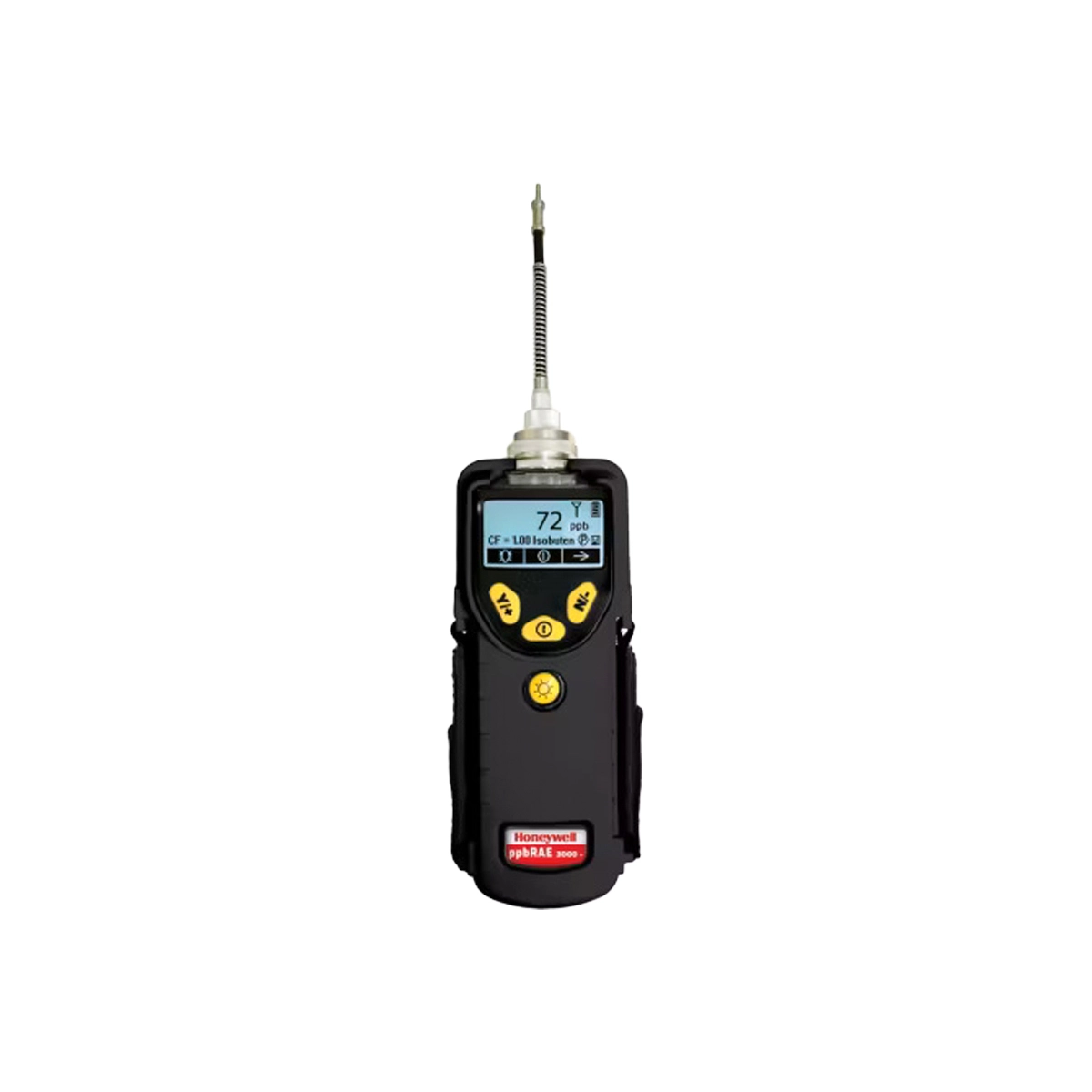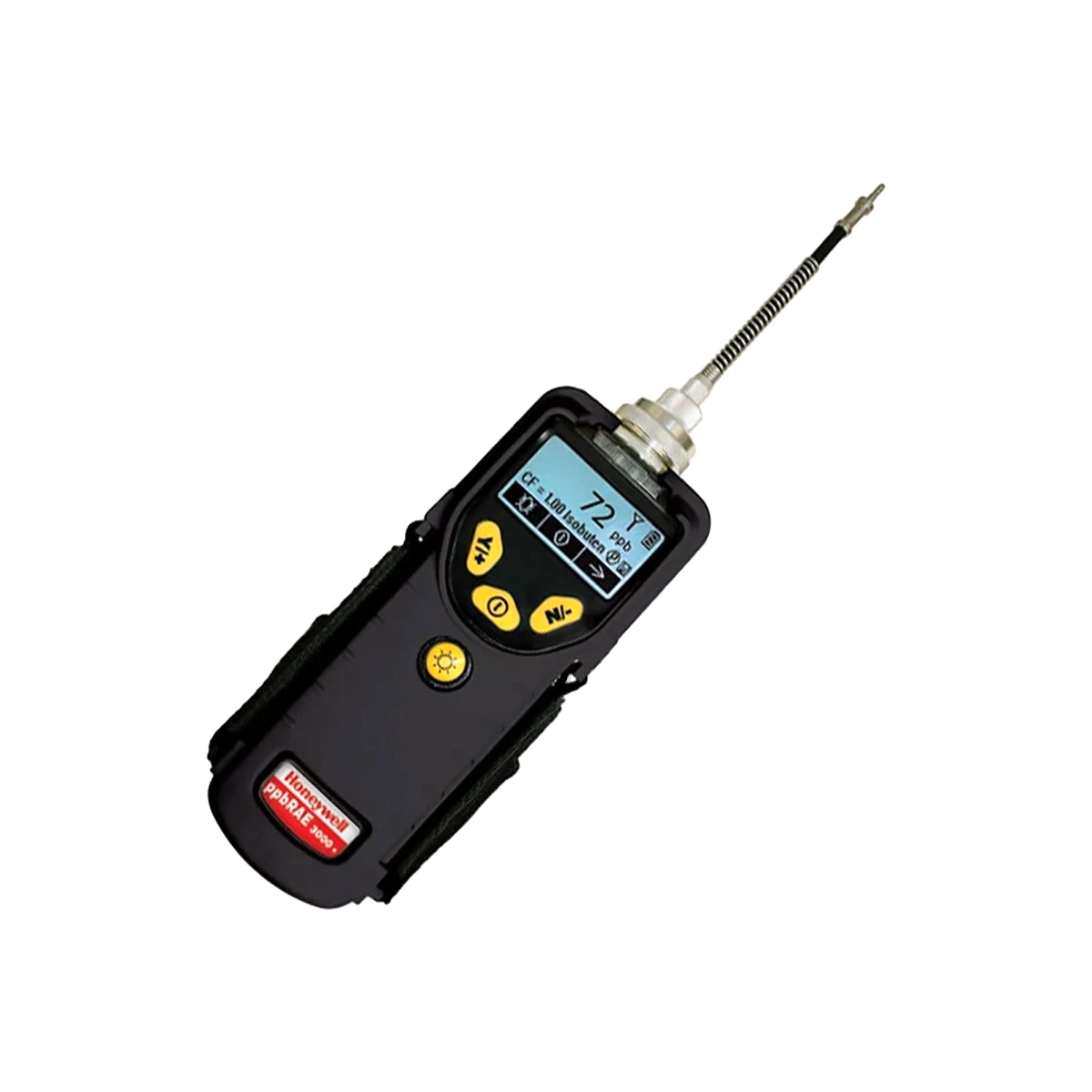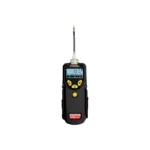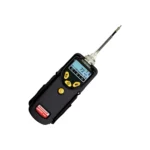


RAE Systems ppbRAE 3000

From £5,976.00 (inc. VAT £7,171.20)

Make Enquiry

ShipServ

Approved Supplier

12-Month

Certified Calibration

Fast Shipping

To Ports Worldwide

Contact Us

For Custom Orders

Description

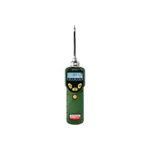
RAE Systems ppbRAE 3000 is a handheld ppb VOC monitor for hazardous areas, combining ultra‑trace PID performance with wireless connectivity.

The RAE Systems ppbRAE 3000 is an advanced handheld volatile organic compound (VOC) monitor with parts‑per‑billion sensitivity for early warning of VOC risks. Third‑generation photoionisation detector (PID) technology, rapid response, and humidity compensation support accurate, stable readings from trace to high concentrations. Intrinsically safe construction, rugged MIL‑STD housing, and high ingress protection enable deployment in demanding hazardous environments. Integrated strong sample pumping, extensive datalogging, wireless options, and simple field servicing make it a versatile platform for HazMat, CBRNE, industrial safety, and environmental monitoring programmes.


AT A GLANCE

  • Ultra‑trace VOC performance: Parts‑per‑billion sensitivity with fast response and a wide measurement range from trace to high concentrations.
  • Rugged and intrinsically safe: Robust MIL‑STD‑tested housing with high ingress protection for harsh, hazardous environments and straightforward decontamination.
  • Efficient field operation: Strong internal pump, large graphic display and gloved‑hand keypad support confident sampling in PPE and low‑visibility conditions.
  • Connected, data‑rich platform: Wireless options, long‑term datalogging and automated calibration compatibility streamline compliance, reporting and remote monitoring.

For detailed technical data, consult the Specifications tab.

Overview of RAE Systems ppbRAE 3000

Ultra‑trace VOC detection for early warning


The RAE Systems ppbRAE 3000 is designed to capture volatile organic compound hazards at very low levels before they escalate. Parts‑per‑billion resolution and an extended measurement range from trace to high concentrations support applications from initial reconnaissance and leak tracing through to decontamination, remediation and long‑term worker exposure monitoring. A fast T90 response of around three seconds enables rapid decision‑making in time‑critical situations such as HazMat incidents, CBRNE deployments and plant upsets.

Third‑generation PID technology, combined with patented Reflex PID Technology™, delivers high accuracy, stability and simplified calibration. Integral temperature and humidity sensors provide humidity compensation, helping maintain measurement integrity in changing environmental conditions. Resolution down to 0.1 ppb on appropriate ranges supports ultra‑trace detection where early intervention is essential.

Engineered for harsh, hazardous environments


The ppbRAE 3000 is built for the realities of field work in hazardous locations. A rugged housing tested to MIL‑STD‑810F, together with IP65 protection in operation and IP67 protection when powered off without the probe, resists shock, dust and water and allows straightforward cleaning and decontamination after use. Intrinsic safety approvals for classified areas support deployment where flammable gases or vapours may be present, helping safety managers standardise on a single VOC platform across high‑risk zones.

High resistance to electromagnetic and radio‑frequency interference, combined with compliance to relevant EMC and radio directives, supports reliable operation around handheld radios and other communications equipment commonly used by CBRNE, HazMat, civil defence, oil and gas, industrial safety and environmental teams. Optional durable rubber boots, including high‑visibility versions, add impact protection and improve visibility in congested or low‑light environments.

Fast, flexible sampling and broad compound coverage


An internal strong sample pump draws gas from up to 30 m horizontally or vertically, enabling remote sampling from confined spaces, elevated structures and other hard‑to‑reach locations. Supplied sampling accessories, including flexible probes and external filters, support a wide range of applications such as indoor air quality assessments, venue protection, plant turnarounds, decontamination and remediation projects.

The detector supports both the standard 10.6 eV PID lamp and an optional 9.8 eV lamp within a single instrument, allowing users to align lamp selection with their monitoring strategy. An integrated correction factor library for several hundred compounds enables measurement of more chemicals than many general PID monitors, helping consolidate equipment and reduce the need for multiple specialist devices across a fleet.

Intuitive operation in PPE and low‑visibility conditions


The ppbRAE 3000 is configured for confident operation in full personal protective equipment. Large, well‑spaced keys remain easy to operate through multiple glove layers, while the large graphic display clearly shows gas type, applied correction factor, instantaneous VOC concentration, STEL, TWA, peak, battery status, date, time and temperature. This helps frontline teams interpret readings quickly under pressure.

A built‑in high‑intensity flashlight illuminates sampling points in dark or confined spaces, reducing the need for additional torches and simplifying one‑handed operation. Multi‑language capability covering a broad set of languages supports global and multilingual workforces, reducing training effort and the risk of misinterpretation across sites and shifts.

Robust alarms and diagnostic visibility


The instrument incorporates a 95 dB audible alarm and bright red LED visual indicators with distinct patterns for high, low, STEL and TWA events, enabling operators to distinguish alarm types at a glance. Alarm behaviour can be configured as latching with manual acknowledgment or as automatic reset, aligning the device with local procedures and regulatory requirements.

Additional diagnostic alarms for low battery and pump stall conditions enhance confidence in the validity of readings and the state of the instrument. Low‑flow auto pump shut‑off protects the pump during challenging sampling conditions, such as long sample lines or blocked filters, and helps maintain measurement integrity.

Lower maintenance and predictable ownership costs


Patented sensor and lamp auto‑cleaning and duty‑cycling functions are designed to reduce fouling and extend service intervals, particularly in dirty or high‑load atmospheres. Tool‑free access to the lamp, sensor and battery allows rapid field servicing, minimising downtime during critical operations and reducing dependence on workshop facilities.

Onboard calibration memory stores data for multiple calibration gases, alarm setpoints, spans and dates, simplifying record‑keeping and audit preparation. Compatibility with AutoRAE 2 and AutoRAE calibration cradles supports automated bump testing and calibration, helping standardise maintenance practices and reduce manual workload across larger instrument fleets. Warranty coverage on key components and optional long‑term service programmes, including multi‑year repair and replacement options, assist in planning budgets and controlling total cost of ownership.

Connected, data‑driven VOC monitoring


The ppbRAE 3000 supports multiple wireless modules, including mesh, Bluetooth, BLE and RF modem options operating on licence‑free bands and relevant wireless standards. When paired with RAELink3, EchoView, ProRAE Guardian and RAEMesh networks, the detector can transmit real‑time readings, alarms and status information over line‑of‑sight mesh links or longer ranges via dedicated gateways, enabling remote oversight from command centres or control rooms.

A dedicated mobile app enhances survey workflows, datalogging and configuration in the field. Standard onboard datalogging captures approximately six months of data at one‑minute intervals, supporting incident investigation, trend analysis and regulatory reporting. Data can be downloaded via the charging cradle to a PC or transferred wirelessly via compatible radio and Bluetooth Low Energy connections.

Portable power and ready‑to‑deploy kits


With a compact form factor and a weight of around 738 g, the ppbRAE 3000 is suitable for extended handheld use during long shifts or large‑area surveys. A field‑replaceable rechargeable lithium‑ion battery provides typical run times of around 16 hours, while an alkaline battery adapter offers additional flexibility and resilience during prolonged incidents or remote deployments. Operation over a wide temperature and non‑condensing humidity range supports year‑round use in varied climates.

The detector is available as a monitor‑only unit, as part of accessory kits, or with optional calibration packages. Accessory kits typically include a charging and download cradle, hard transport case, filters, tubing and calibration accessories, while organic vapour zeroing kits and Tedlar calibration bags support accurate baselining and field calibration. A comprehensive starter kit with charger, batteries, filters, zeroing tubes, case and tools allows rapid deployment across applications including CBRNE response, HazMat incidents, industrial turnarounds, venue protection and ongoing worker exposure monitoring.

For detailed technical data, consult the Specifications tab.

Documentation

RAE Systems ppbRAE 3000 is a handheld ppb VOC monitor for hazardous areas, combining ultra‑trace PID performance with wireless connectivity.

The RAE Systems ppbRAE 3000 is an advanced handheld volatile organic compound (VOC) monitor with parts‑per‑billion sensitivity for early warning of VOC risks. Third‑generation photoionisation detector (PID) technology, rapid response, and humidity compensation support accurate, stable readings from trace to high concentrations. Intrinsically safe construction, rugged MIL‑STD housing, and high ingress protection enable deployment in demanding hazardous environments. Integrated strong sample pumping, extensive datalogging, wireless options, and simple field servicing make it a versatile platform for HazMat, CBRNE, industrial safety, and environmental monitoring programmes.

AT A GLANCE

  • Ultra‑trace VOC performance: Parts‑per‑billion sensitivity with fast response and a wide measurement range from trace to high concentrations.
  • Rugged and intrinsically safe: Robust MIL‑STD‑tested housing with high ingress protection for harsh, hazardous environments and straightforward decontamination.
  • Efficient field operation: Strong internal pump, large graphic display and gloved‑hand keypad support confident sampling in PPE and low‑visibility conditions.
  • Connected, data‑rich platform: Wireless options, long‑term datalogging and automated calibration compatibility streamline compliance, reporting and remote monitoring.

For detailed technical data, consult the Specifications tab.

Overview of RAE Systems ppbRAE 3000

Ultra‑trace VOC detection for early warning


The RAE Systems ppbRAE 3000 is designed to capture volatile organic compound hazards at very low levels before they escalate. Parts‑per‑billion resolution and an extended measurement range from trace to high concentrations support applications from initial reconnaissance and leak tracing through to decontamination, remediation and long‑term worker exposure monitoring. A fast T90 response of around three seconds enables rapid decision‑making in time‑critical situations such as HazMat incidents, CBRNE deployments and plant upsets.

Third‑generation PID technology, combined with patented Reflex PID Technology™, delivers high accuracy, stability and simplified calibration. Integral temperature and humidity sensors provide humidity compensation, helping maintain measurement integrity in changing environmental conditions. Resolution down to 0.1 ppb on appropriate ranges supports ultra‑trace detection where early intervention is essential.

Engineered for harsh, hazardous environments


The ppbRAE 3000 is built for the realities of field work in hazardous locations. A rugged housing tested to MIL‑STD‑810F, together with IP65 protection in operation and IP67 protection when powered off without the probe, resists shock, dust and water and allows straightforward cleaning and decontamination after use. Intrinsic safety approvals for classified areas support deployment where flammable gases or vapours may be present, helping safety managers standardise on a single VOC platform across high‑risk zones.

High resistance to electromagnetic and radio‑frequency interference, combined with compliance to relevant EMC and radio directives, supports reliable operation around handheld radios and other communications equipment commonly used by CBRNE, HazMat, civil defence, oil and gas, industrial safety and environmental teams. Optional durable rubber boots, including high‑visibility versions, add impact protection and improve visibility in congested or low‑light environments.

Fast, flexible sampling and broad compound coverage


An internal strong sample pump draws gas from up to 30 m horizontally or vertically, enabling remote sampling from confined spaces, elevated structures and other hard‑to‑reach locations. Supplied sampling accessories, including flexible probes and external filters, support a wide range of applications such as indoor air quality assessments, venue protection, plant turnarounds, decontamination and remediation projects.

The detector supports both the standard 10.6 eV PID lamp and an optional 9.8 eV lamp within a single instrument, allowing users to align lamp selection with their monitoring strategy. An integrated correction factor library for several hundred compounds enables measurement of more chemicals than many general PID monitors, helping consolidate equipment and reduce the need for multiple specialist devices across a fleet.

Intuitive operation in PPE and low‑visibility conditions


The ppbRAE 3000 is configured for confident operation in full personal protective equipment. Large, well‑spaced keys remain easy to operate through multiple glove layers, while the large graphic display clearly shows gas type, applied correction factor, instantaneous VOC concentration, STEL, TWA, peak, battery status, date, time and temperature. This helps frontline teams interpret readings quickly under pressure.

A built‑in high‑intensity flashlight illuminates sampling points in dark or confined spaces, reducing the need for additional torches and simplifying one‑handed operation. Multi‑language capability covering a broad set of languages supports global and multilingual workforces, reducing training effort and the risk of misinterpretation across sites and shifts.

Robust alarms and diagnostic visibility


The instrument incorporates a 95 dB audible alarm and bright red LED visual indicators with distinct patterns for high, low, STEL and TWA events, enabling operators to distinguish alarm types at a glance. Alarm behaviour can be configured as latching with manual acknowledgment or as automatic reset, aligning the device with local procedures and regulatory requirements.

Additional diagnostic alarms for low battery and pump stall conditions enhance confidence in the validity of readings and the state of the instrument. Low‑flow auto pump shut‑off protects the pump during challenging sampling conditions, such as long sample lines or blocked filters, and helps maintain measurement integrity.

Lower maintenance and predictable ownership costs


Patented sensor and lamp auto‑cleaning and duty‑cycling functions are designed to reduce fouling and extend service intervals, particularly in dirty or high‑load atmospheres. Tool‑free access to the lamp, sensor and battery allows rapid field servicing, minimising downtime during critical operations and reducing dependence on workshop facilities.

Onboard calibration memory stores data for multiple calibration gases, alarm setpoints, spans and dates, simplifying record‑keeping and audit preparation. Compatibility with AutoRAE 2 and AutoRAE calibration cradles supports automated bump testing and calibration, helping standardise maintenance practices and reduce manual workload across larger instrument fleets. Warranty coverage on key components and optional long‑term service programmes, including multi‑year repair and replacement options, assist in planning budgets and controlling total cost of ownership.

Connected, data‑driven VOC monitoring


The ppbRAE 3000 supports multiple wireless modules, including mesh, Bluetooth, BLE and RF modem options operating on licence‑free bands and relevant wireless standards. When paired with RAELink3, EchoView, ProRAE Guardian and RAEMesh networks, the detector can transmit real‑time readings, alarms and status information over line‑of‑sight mesh links or longer ranges via dedicated gateways, enabling remote oversight from command centres or control rooms.

A dedicated mobile app enhances survey workflows, datalogging and configuration in the field. Standard onboard datalogging captures approximately six months of data at one‑minute intervals, supporting incident investigation, trend analysis and regulatory reporting. Data can be downloaded via the charging cradle to a PC or transferred wirelessly via compatible radio and Bluetooth Low Energy connections.

Portable power and ready‑to‑deploy kits


With a compact form factor and a weight of around 738 g, the ppbRAE 3000 is suitable for extended handheld use during long shifts or large‑area surveys. A field‑replaceable rechargeable lithium‑ion battery provides typical run times of around 16 hours, while an alkaline battery adapter offers additional flexibility and resilience during prolonged incidents or remote deployments. Operation over a wide temperature and non‑condensing humidity range supports year‑round use in varied climates.

The detector is available as a monitor‑only unit, as part of accessory kits, or with optional calibration packages. Accessory kits typically include a charging and download cradle, hard transport case, filters, tubing and calibration accessories, while organic vapour zeroing kits and Tedlar calibration bags support accurate baselining and field calibration. A comprehensive starter kit with charger, batteries, filters, zeroing tubes, case and tools allows rapid deployment across applications including CBRNE response, HazMat incidents, industrial turnarounds, venue protection and ongoing worker exposure monitoring.

For detailed technical data, consult the Specifications tab.